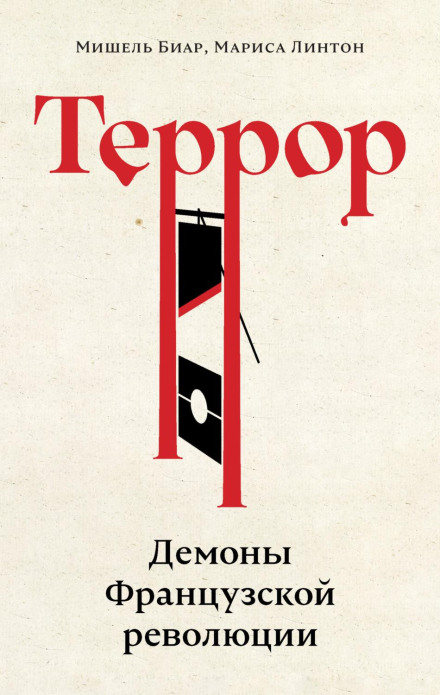
Terror: Demons of the French Revolution
9 hrs. 11 min.
Language
Russian
Author
Marisa Linton
Author
Michel Biard
Narrator
Ilya Alyokhin
Narrator
Ilya Alyokhin
Description
The French Revolution of the 18th century presented a remarkable contradiction to the entire world. The drive for human rights and freedom of peoples led to brutal repression and mass executions. The revolution not only equalized citizens’ rights before the law but also increased their chances of ending up on the guillotine. Michel Biard and Marisa Linton’s study is devoted to this surprising contradiction, plunging the reader into the bleak times of the Revolution known as the Terror. The question is whether the Terror was the result of the chaotic executions of Maximilien Robespierre—or whether it was a carefully planned policy of the Revolution. What philosophical ideas, fears, and hopes fueled aggression among the people, and why did politicians disregard human rights, breaking the law allegedly in order to protect it?
The Terror became not only a widely known slogan and a political concept that sparked heated debates and theoretical justifications, but also a phenomenon deeply rooted in the Revolution and among revolutionaries. Intensifying fears and emotions, constant conflicts and radicalization of repressive legislation, as well as tension in political struggle in the Convention and around it, contributed to the emergence, development, and continuation of the Terror.
The Terror became not only a widely known slogan and a political concept that sparked heated debates and theoretical justifications, but also a phenomenon deeply rooted in the Revolution and among revolutionaries. Intensifying fears and emotions, constant conflicts and radicalization of repressive legislation, as well as tension in political struggle in the Convention and around it, contributed to the emergence, development, and continuation of the Terror.
100%
27:03
00
1:01:49
01
54:43
02
1:05:07
03
1:00:15
04
1:01:48
05
1:13:52
06
50:34
07
1:36:04
08
