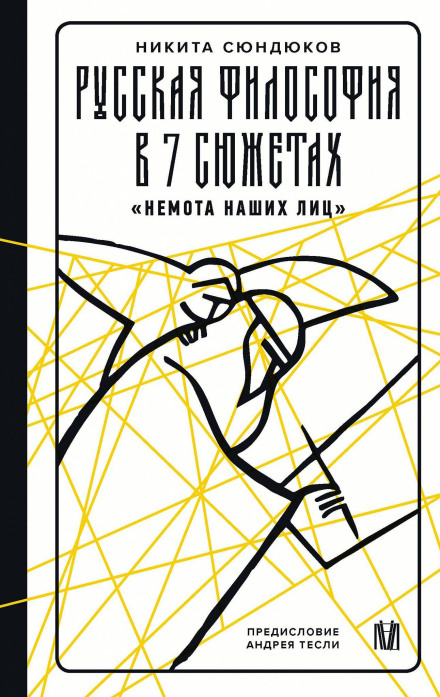
Russian Philosophy in 7 Stories. 'The Muteness of Our Faces'
9 hrs. 57 min.
Language
Russian
Author
Nikita Syundyukov
Author
Nikita Syundyukov
Narrator
Nikita Syundyukov
Narrator
Nikita Syundyukov
Description
A guide to the main ideas of Russian philosophy. The authors examine who can be considered its starting point, why domestic thought developed a distinctly existential character, and how “emptiness” turned into a significant cultural mindset. Using seven plotlines featuring Chaadaev, Dostoevsky, Solovyov, Merezhkovsky, Berdyaev, Shestov, Bulgakov, and Florensky, Nikita Syundyukov shows why Russian philosophy is inseparable from literature and religious tradition, and how it keeps returning again and again to the truth capable of changing the world.
• Who may rightfully be called the first Russian philosopher?
• Why did the deepest penetration into the problem of good and evil happen precisely to the writer?
• How did Vladimir Solovyov build a coherent philosophical system—and why did he see its failure?
• How did the Silver Age sense the oncoming crisis of humanity in advance and search for a way out?
• Why did Russia become a territory of “victorious” existentialism even before existentialism appeared as a movement?
• How does the original teaching about Sophia help distinguish beauty and meaning in the world?
• Why did emptiness become one of the national values?
Nikita Syundyukov is a senior lecturer at RANEPA in Saint Petersburg, a lecturer at the Sirius educational center, and the author of publications in “Foma” and “Stol.” Author of the book “Dostoevsky Was Here” (2025) and of the Telegram channel “Lakonian Pups.” Foreword by Andrey Tesli. K. Syundyukov, manuscript, 2024. Design: LLC “AST Publishing House,” 2025.
• Who may rightfully be called the first Russian philosopher?
• Why did the deepest penetration into the problem of good and evil happen precisely to the writer?
• How did Vladimir Solovyov build a coherent philosophical system—and why did he see its failure?
• How did the Silver Age sense the oncoming crisis of humanity in advance and search for a way out?
• Why did Russia become a territory of “victorious” existentialism even before existentialism appeared as a movement?
• How does the original teaching about Sophia help distinguish beauty and meaning in the world?
• Why did emptiness become one of the national values?
Nikita Syundyukov is a senior lecturer at RANEPA in Saint Petersburg, a lecturer at the Sirius educational center, and the author of publications in “Foma” and “Stol.” Author of the book “Dostoevsky Was Here” (2025) and of the Telegram channel “Lakonian Pups.” Foreword by Andrey Tesli. K. Syundyukov, manuscript, 2024. Design: LLC “AST Publishing House,” 2025.
100%
08:36
Русская философия в 7 сюжетах. «Немота наших лиц» 01
11:22
Русская философия в 7 сюжетах. «Немота наших лиц» 02
42:19
Русская философия в 7 сюжетах. «Немота наших лиц» 03
46:29
Русская философия в 7 сюжетах. «Немота наших лиц» 04
56:48
Русская философия в 7 сюжетах. «Немота наших лиц» 05
34:57
Русская философия в 7 сюжетах. «Немота наших лиц» 06
26:52
Русская философия в 7 сюжетах. «Немота наших лиц» 07
41:37
Русская философия в 7 сюжетах. «Немота наших лиц» 08
41:02
Русская философия в 7 сюжетах. «Немота наших лиц» 09
45:01
Русская философия в 7 сюжетах. «Немота наших лиц» 10
38:48
Русская философия в 7 сюжетах. «Немота наших лиц» 11
50:59
Русская философия в 7 сюжетах. «Немота наших лиц» 12
39:24
Русская философия в 7 сюжетах. «Немота наших лиц» 13
29:59
Русская философия в 7 сюжетах. «Немота наших лиц» 14
40:00
Русская философия в 7 сюжетах. «Немота наших лиц» 15
37:16
Русская философия в 7 сюжетах. «Немота наших лиц» 16
05:56
Русская философия в 7 сюжетах. «Немота наших лиц» 17
