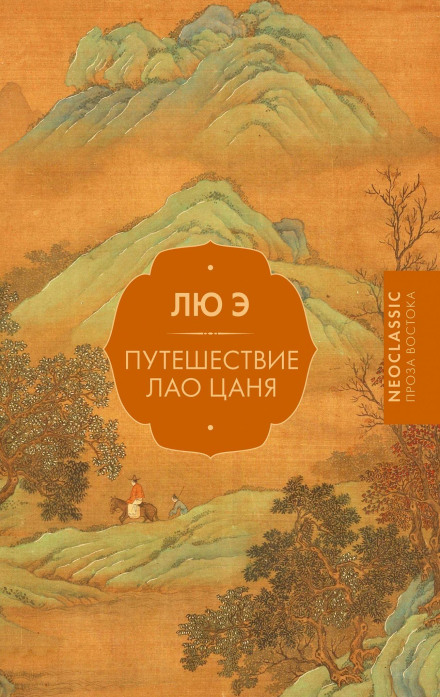
The Travels of Lao Ts'an
9 hrs. 28 min.
Description
Wandering physician Lao Can—whose traits are easy to recognize as the author’s—observes lawlessness and abuses by officials and sees how this hurts ordinary people. He can’t stay indifferent to China’s fate; he tries to influence what’s happening—sometimes through persuasion, sometimes through actions—helping people and attempting to change the country’s future.
The most well-known work by Liu Ye is “The Journey of Lao Can,” written as an exposé novel and conceived to be close in spirit to A. N. Radishchev’s “A Journey from Petersburg to Moscow.” The book was highly praised by contemporaries, including Lu Xun and Hu Shi, and became one of the outstanding novels of the late Qing era.
With the brave and noble wandering doctor, the reader travels through the cities and villages of early 20th-century China. On his path, Lao Can encounters countless manifestations of bureaucratic arbitrariness that brought only misery to people. He participates in investigating a notorious murder, tries to tame a great river, and voices reformist ideas about what China could become.
Translated by V. Semanov; heirs, 2025. AST Publishing House, 2025.
The most well-known work by Liu Ye is “The Journey of Lao Can,” written as an exposé novel and conceived to be close in spirit to A. N. Radishchev’s “A Journey from Petersburg to Moscow.” The book was highly praised by contemporaries, including Lu Xun and Hu Shi, and became one of the outstanding novels of the late Qing era.
With the brave and noble wandering doctor, the reader travels through the cities and villages of early 20th-century China. On his path, Lao Can encounters countless manifestations of bureaucratic arbitrariness that brought only misery to people. He participates in investigating a notorious murder, tries to tame a great river, and voices reformist ideas about what China could become.
Translated by V. Semanov; heirs, 2025. AST Publishing House, 2025.
100%
42:30
Путешествие Лао Цаня 01
23:03
Путешествие Лао Цаня 02
22:48
Путешествие Лао Цаня 03
24:25
Путешествие Лао Цаня 04
23:14
Путешествие Лао Цаня 05
24:47
Путешествие Лао Цаня 06
27:02
Путешествие Лао Цаня 07
30:30
Путешествие Лао Цаня 08
24:45
Путешествие Лао Цаня 09
31:20
Путешествие Лао Цаня 10
27:33
Путешествие Лао Цаня 11
26:41
Путешествие Лао Цаня 12
32:07
Путешествие Лао Цаня 13
20:02
Путешествие Лао Цаня 14
23:10
Путешествие Лао Цаня 15
25:05
Путешествие Лао Цаня 16
26:54
Путешествие Лао Цаня 17
29:02
Путешествие Лао Цаня 18
25:26
Путешествие Лао Цаня 19
28:53
Путешествие Лао Цаня 20
29:07
Путешествие Лао Цаня 21
