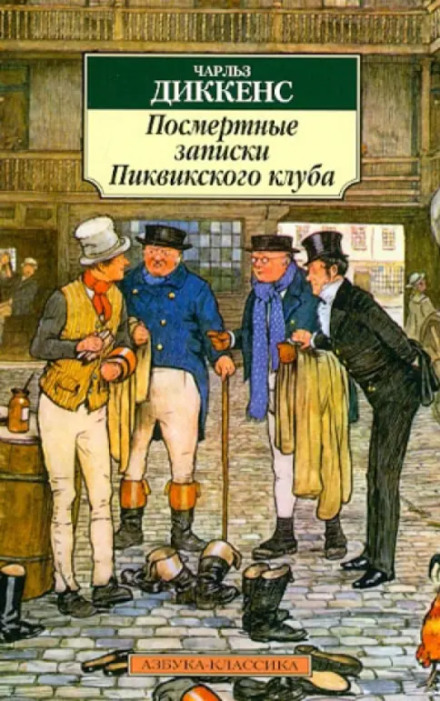
The Posthumous Papers of the Pickwick Club
40 hrs. 6 min.
Language
Russian
Author
Charles Dickens
Author
Charles Dickens
Narrator
Valery Tolkov
Narrator
Valery Tolkov
Description
“The Posthumous Papers of the Pickwick Club” (or “The Notes of the Pickwick Club”) is Charles Dickens’s debut novel, published in installments from March 1836 to November 1837.
The work is built as a series of episodes and adventures loosely linked by a common storyline, which was dictated by the magazine format of publication. The book caused a sensation: it was widely reprinted in a pirated way, stage plays were produced from it, and various souvenir products were released.
At the center of the narrative is Samuel Pickwick, Esq., a well-off and good-natured elderly gentleman—the creator and unwavering chairman of the Pickwick Club. Tired of the usual club entertainments, he invites himself and three fellow Pickwickians to set off from London on a journey through the provinces, to observe life in the countryside and write reports about their impressions. Their trips through England by stagecoach form the basis of the plot. A sequence of comic events, starting with a romantic misunderstanding with the landlord’s landlady—a widow, Mrs. Bardell—leads to the famous lawsuit “Bardell v. Pickwick”; the outcome of the trial is that both end up in Fleet Debtors’ Prison.
The work is built as a series of episodes and adventures loosely linked by a common storyline, which was dictated by the magazine format of publication. The book caused a sensation: it was widely reprinted in a pirated way, stage plays were produced from it, and various souvenir products were released.
At the center of the narrative is Samuel Pickwick, Esq., a well-off and good-natured elderly gentleman—the creator and unwavering chairman of the Pickwick Club. Tired of the usual club entertainments, he invites himself and three fellow Pickwickians to set off from London on a journey through the provinces, to observe life in the countryside and write reports about their impressions. Their trips through England by stagecoach form the basis of the plot. A sequence of comic events, starting with a romantic misunderstanding with the landlord’s landlady—a widow, Mrs. Bardell—leads to the famous lawsuit “Bardell v. Pickwick”; the outcome of the trial is that both end up in Fleet Debtors’ Prison.
100%
18:42
Посмертные записки Пиквикского клуба 01
1:24:09
Посмертные записки Пиквикского клуба 02
39:05
Посмертные записки Пиквикского клуба 03
35:44
Посмертные записки Пиквикского клуба 04
29:46
Посмертные записки Пиквикского клуба 05
47:17
Посмертные записки Пиквикского клуба 06
43:41
Посмертные записки Пиквикского клуба 07
41:03
Посмертные записки Пиквикского клуба 08
24:33
Посмертные записки Пиквикского клуба 09
41:48
Посмертные записки Пиквикского клуба 10
1:04:12
Посмертные записки Пиквикского клуба 11
19:17
Посмертные записки Пиквикского клуба 12
1:00:35
Посмертные записки Пиквикского клуба 13
54:04
Посмертные записки Пиквикского клуба 14
46:05
Посмертные записки Пиквикского клуба 15
57:47
Посмертные записки Пиквикского клуба 16
31:52
Посмертные записки Пиквикского клуба 17
35:27
Посмертные записки Пиквикского клуба 18
43:43
Посмертные записки Пиквикского клуба 19
48:23
Посмертные записки Пиквикского клуба 20
1:01:32
Посмертные записки Пиквикского клуба 21
53:11
Посмертные записки Пиквикского клуба 22
26:55
Посмертные записки Пиквикского клуба 23
46:19
Посмертные записки Пиквикского клуба 24
55:35
Посмертные записки Пиквикского клуба 25
19:07
Посмертные записки Пиквикского клуба 26
24:24
Посмертные записки Пиквикского клуба 27
1:16:49
Посмертные записки Пиквикского клуба 28
23:58
Посмертные записки Пиквикского клуба 29
38:38
Посмертные записки Пиквикского клуба 30
51:40
Посмертные записки Пиквикского клуба 31
41:05
Посмертные записки Пиквикского клуба 32
48:46
Посмертные записки Пиквикского клуба 33
1:18:50
Посмертные записки Пиквикского клуба 34
48:22
Посмертные записки Пиквикского клуба 35
19:32
Посмертные записки Пиквикского клуба 36
30:23
Посмертные записки Пиквикского клуба 37
42:46
Посмертные записки Пиквикского клуба 38
43:56
Посмертные записки Пиквикского клуба 39
38:22
Посмертные записки Пиквикского клуба 40
40:03
Посмертные записки Пиквикского клуба 41
46:35
Посмертные записки Пиквикского клуба 42
39:41
Посмертные записки Пиквикского клуба 43
42:07
Посмертные записки Пиквикского клуба 44
51:54
Посмертные записки Пиквикского клуба 45
31:49
Посмертные записки Пиквикского клуба 46
35:30
Посмертные записки Пиквикского клуба 47
33:43
Посмертные записки Пиквикского клуба 48
41:38
Посмертные записки Пиквикского клуба 49
41:52
Посмертные записки Пиквикского клуба 50
31:47
Посмертные записки Пиквикского клуба 51
32:59
Посмертные записки Пиквикского клуба 52
39:41
Посмертные записки Пиквикского клуба 53
31:32
Посмертные записки Пиквикского клуба 54
31:36
Посмертные записки Пиквикского клуба 55
1:09:33
Посмертные записки Пиквикского клуба 56
27:22
Посмертные записки Пиквикского клуба 57
