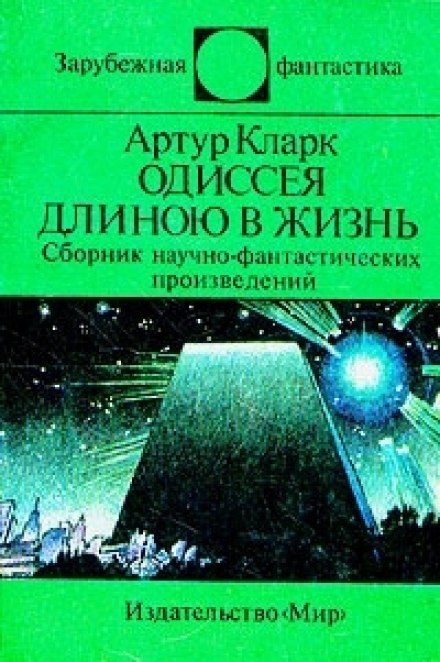
A Life Odyssey
18 hrs. 40 min.
Language
Russian
Author
Arthur Clarke
Author
Arthur Clarke
Narrator
Svetlana Raskatova
Narrator
Svetlana Raskatova
Description
The collection includes one of the first novels by the famous English science-fiction writer A. Clarke—“Childhood’s End”—and one of his last published novels, “2061: Odyssey Three.”
What did the compilers mean by calling this collection “An Odyssey for a Lifetime”? Judging by everything, it reflects his sincere devotion to Arthur C. Clarke’s science fiction, carried through the years. A man who—nothing less—commented on the Americans’ moon landing, he never doubted humanity’s cosmic future. The appearance of intelligent life on Earth for Clarke was not something accidental; it was merely the next step in a long chain of evolution. Far from the last. For many years, the writer thought about what the next step would be. What will replace today’s humanity? Collective mind, as in “Childhood’s End,” or an immortal, forever lonely cosmic wanderer, racing from star to star? Like many classics of science fiction, Clarke kept returning to the same question, the same theme—varying it in different ways and playing with it in different combinations.
What did the compilers mean by calling this collection “An Odyssey for a Lifetime”? Judging by everything, it reflects his sincere devotion to Arthur C. Clarke’s science fiction, carried through the years. A man who—nothing less—commented on the Americans’ moon landing, he never doubted humanity’s cosmic future. The appearance of intelligent life on Earth for Clarke was not something accidental; it was merely the next step in a long chain of evolution. Far from the last. For many years, the writer thought about what the next step would be. What will replace today’s humanity? Collective mind, as in “Childhood’s End,” or an immortal, forever lonely cosmic wanderer, racing from star to star? Like many classics of science fiction, Clarke kept returning to the same question, the same theme—varying it in different ways and playing with it in different combinations.
100%
05:10
01_01_01
05:07
01_01_02
05:09
01_01_03
05:16
01_01_04
05:03
01_01_05
05:08
01_01_06
05:19
01_01_07
05:03
01_01_08
05:10
01_01_09
05:01
01_01_10
03:56
01_01_11
05:25
01_02_01
05:02
01_02_02
05:03
01_02_03
05:03
01_02_04
05:02
01_02_05
05:04
01_02_06
05:04
01_02_07
05:03
01_02_08
05:13
01_02_09
05:02
01_02_10
03:31
01_02_11
05:23
01_03_01
05:11
01_03_02
05:12
01_03_03
05:25
01_03_04
05:02
01_03_05
05:23
01_03_06
05:21
01_03_07
05:03
01_03_08
05:26
01_03_09
05:14
01_03_10
02:15
01_03_11
05:23
01_04_01
05:13
01_04_02
05:11
01_04_03
05:02
01_04_04
05:13
01_04_05
05:19
01_04_06
05:19
01_04_07
05:09
01_04_08
05:22
01_04_09
05:04
01_04_10
03:02
01_04_11
05:07
02_01_01
05:16
02_01_02
05:09
02_01_03
05:03
02_01_04
05:11
02_01_05
05:11
02_01_06
05:07
02_01_07
05:15
02_01_08
05:15
02_01_09
05:32
02_01_10
03:41
02_01_11
07:02
02_02_01
05:05
02_02_02
05:29
02_02_03
05:27
02_02_04
06:41
02_02_05
05:23
02_02_06
06:37
02_02_07
05:06
02_02_08
06:03
02_02_09
02:28
02_02_10
05:18
02_03_01
05:14
02_03_02
05:06
02_03_03
05:05
02_03_04
05:40
02_03_05
05:14
02_03_06
05:16
02_03_07
05:30
02_03_08
05:28
02_03_09
06:50
02_03_10
00:47
02_03_11
05:18
02_04_01
05:06
02_04_02
05:04
02_04_03
05:03
02_04_04
05:08
02_04_05
05:39
02_04_06
05:53
02_04_07
05:02
02_04_08
05:48
02_04_09
05:03
02_04_10
02:06
02_04_11
05:34
03_01_01
05:08
03_01_02
05:47
03_01_03
05:10
03_01_04
05:16
03_01_05
05:37
03_01_06
07:56
03_01_07
05:08
03_01_08
05:08
03_01_09
04:17
03_01_10
05:29
03_02_01
05:10
03_02_02
05:09
03_02_03
05:06
03_02_04
05:08
03_02_05
05:13
03_02_06
05:07
03_02_07
05:09
03_02_08
05:08
03_02_09
05:03
03_02_10
03:11
03_02_11
05:27
03_03_01
05:13
03_03_02
05:02
03_03_03
05:13
03_03_04
05:05
03_03_05
05:08
03_03_06
05:41
03_03_07
05:21
03_03_08
05:34
03_03_09
05:02
03_03_10
02:04
03_03_11
05:24
03_04_01
05:22
03_04_02
05:16
03_04_03
05:09
03_04_04
05:32
03_04_05
05:12
03_04_06
05:46
03_04_07
05:21
03_04_08
05:06
03_04_09
05:04
03_04_10
01:33
03_04_11
05:06
04_01_01
06:01
04_01_02
05:13
04_01_03
07:39
04_01_04
06:32
04_01_05
06:03
04_01_06
05:45
04_01_07
05:09
04_01_08
05:49
04_01_09
00:39
04_01_10
05:33
04_02_01
05:29
04_02_02
05:08
04_02_03
05:13
04_02_04
05:14
04_02_05
05:32
04_02_06
05:05
04_02_07
05:31
04_02_08
05:15
04_02_09
05:19
04_02_10
01:18
04_02_11
05:25
04_03_01
05:22
04_03_02
05:05
04_03_03
05:01
04_03_04
05:03
04_03_05
05:06
04_03_06
05:05
04_03_07
05:05
04_03_08
05:10
04_03_09
05:57
04_03_10
01:55
04_03_11
05:15
04_04_01
05:07
04_04_02
05:06
04_04_03
05:11
04_04_04
05:02
04_04_05
05:05
04_04_06
05:08
04_04_07
05:03
04_04_08
05:02
04_04_09
05:08
04_04_10
02:36
04_04_11
05:22
05_01_01
05:05
05_01_02
05:33
05_01_03
05:55
05_01_04
05:55
05_01_05
05:39
05_01_06
05:02
05_01_07
05:06
05_01_08
05:08
05_01_09
06:08
05_01_10
05:14
05_02_01
05:19
05_02_02
05:27
05_02_03
05:02
05_02_04
05:27
05_02_05
05:19
05_02_06
05:37
05_02_07
05:02
05_02_08
05:06
05_02_09
05:19
05_02_10
01:59
05_02_11
05:16
05_03_01
05:01
05_03_02
05:09
05_03_03
05:38
05_03_04
05:02
05_03_05
05:37
05_03_06
05:25
05_03_07
05:05
05_03_08
05:11
05_03_09
05:18
05_03_10
01:56
05_03_11
05:19
05_04_01
05:05
05_04_02
05:25
05_04_03
05:09
05_04_04
05:19
05_04_05
05:04
05_04_06
05:15
05_04_07
06:29
05_04_08
05:02
05_04_09
06:33
05_04_10
05:51
06_01
05:47
06_02
05:49
06_03
05:40
06_04
