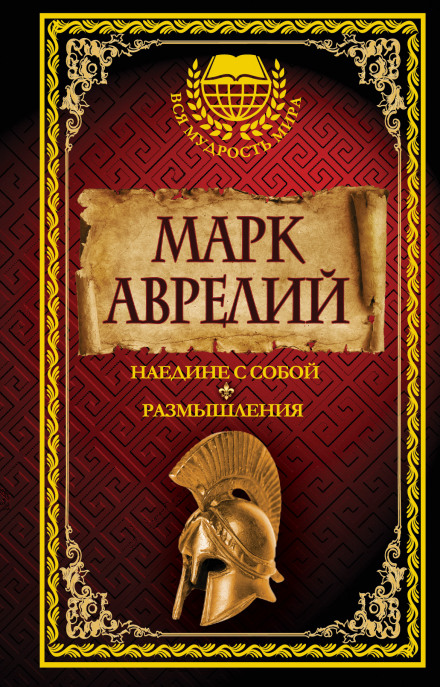
Meditations
6 hrs. 21 min.
Language
Russian
Author
Marcus Aurelius
Author
Marcus Aurelius
Narrator
Ilya Prudovsky
Narrator
Ilya Prudovsky
Description
Marcus Aurelius Antoninus is a Roman emperor, one of the most influential philosophers of Ancient Rome, a representative of late Stoicism. His descendants called Marcus Aurelius “the philosopher on the throne”—throughout the long history of the world, he turned out to be the only philosopher and writer who held the title of emperor.
“The Meditations,” presented in aphoristic form, are thoughts on a person’s moral conduct, the harmony of the human soul, and the sources of personal and universal good.
This “philosophical diary,” which the emperor wrote in a campaign tent while suffering from a severe illness, was discovered only after his death. The book is also known as “To Himself”: according to the physician of Marcus Aurelius, the emperor’s last words were, “It seems I will remain alone with myself even today,” after which something like a smile touched his exhausted lips. The ethical teachings of the royal philosopher are one of the best monuments of moralistic literature—a priceless gem in the crown of world culture.
“The Meditations,” presented in aphoristic form, are thoughts on a person’s moral conduct, the harmony of the human soul, and the sources of personal and universal good.
This “philosophical diary,” which the emperor wrote in a campaign tent while suffering from a severe illness, was discovered only after his death. The book is also known as “To Himself”: according to the physician of Marcus Aurelius, the emperor’s last words were, “It seems I will remain alone with myself even today,” after which something like a smile touched his exhausted lips. The ethical teachings of the royal philosopher are one of the best monuments of moralistic literature—a priceless gem in the crown of world culture.
