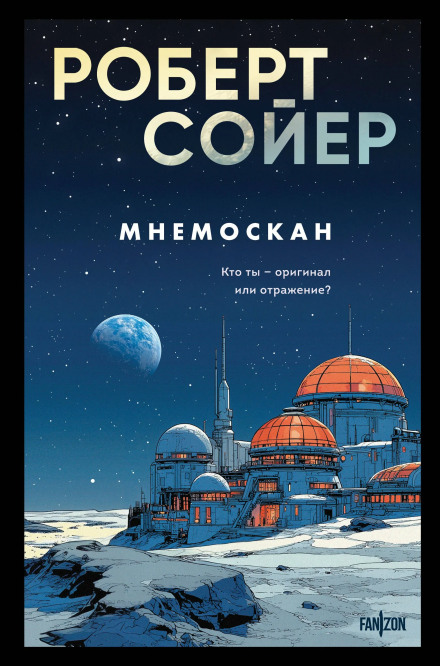
The Terminal Man
13 hrs. 17 min.
Language
Russian
Author
Robert Sawyer
Author
Robert Sawyer
Narrator
Alexey Yadrennikov
Narrator
Alexey Yadrennikov
Description
A dynamic, tense, and deep novel where major scientific breakthroughs become the basis for sharp moral dilemmas and reflections on the nature of personality.
Jake Sullivan dodges death: after learning about a fatal diagnosis, he transfers his consciousness into an android body and thus gets near-certain immortality. Others—other incredibly wealthy people—follow his path as well: using a new memoscan procedure, they leave aging human bodies in an elite complex on the far side of the Moon, while continuing to live on Earth in new shells.
However, the perfect system fails. In his new existence, Jake first finds love—but the woman he chooses is drawn into a legal battle: her son doesn’t recognize the “memoscan” as the same person as the “original” and demands an inheritance. At the same time on the Moon, the biological Jake—saved by medical nanotechnologies— unexpectedly recovers and decides to return.
In such a world, who is considered the real person? Who owns the rights to identity—the living “source,” or the copy to which he himself transferred his place? And where is the line between what we call a person?
“An author clearly and expressively tackles fascinating philosophical paradoxes.” — Entertainment Weekly
“Here converge courtroom drama, strong emotions, and tense sci-fi intrigue; the author confidently keeps all threads, demonstrating intelligence and breadth worthy of Isaac Asimov.” — Starlog
“An artful picture of the future of two neighboring countries turned into opposites; the novel focuses on the legal and ethical consequences of different definitions of humanity, and the story is elegant and literary. Rating: 5.” — Rocky Mountain News
“The author’s most ambitious book: a bright, innovative text full of humor, insight, and depth.” — SF Site
“Combining rigorous science and a strong plot with familiar mastery, the author paints a future that’s frighteningly close to real possibilities.” — Library Journal
“A tightly wound ‘hard’ science fiction book offering rich material for reflection on the ethics of biotechnologies and the nature of consciousness.” — Publishers Weekly
“A charming read—both because of vivid characters and because of the cosmic scope of ideas.” — Winnipeg Free Press
Jake Sullivan dodges death: after learning about a fatal diagnosis, he transfers his consciousness into an android body and thus gets near-certain immortality. Others—other incredibly wealthy people—follow his path as well: using a new memoscan procedure, they leave aging human bodies in an elite complex on the far side of the Moon, while continuing to live on Earth in new shells.
However, the perfect system fails. In his new existence, Jake first finds love—but the woman he chooses is drawn into a legal battle: her son doesn’t recognize the “memoscan” as the same person as the “original” and demands an inheritance. At the same time on the Moon, the biological Jake—saved by medical nanotechnologies— unexpectedly recovers and decides to return.
In such a world, who is considered the real person? Who owns the rights to identity—the living “source,” or the copy to which he himself transferred his place? And where is the line between what we call a person?
“An author clearly and expressively tackles fascinating philosophical paradoxes.” — Entertainment Weekly
“Here converge courtroom drama, strong emotions, and tense sci-fi intrigue; the author confidently keeps all threads, demonstrating intelligence and breadth worthy of Isaac Asimov.” — Starlog
“An artful picture of the future of two neighboring countries turned into opposites; the novel focuses on the legal and ethical consequences of different definitions of humanity, and the story is elegant and literary. Rating: 5.” — Rocky Mountain News
“The author’s most ambitious book: a bright, innovative text full of humor, insight, and depth.” — SF Site
“Combining rigorous science and a strong plot with familiar mastery, the author paints a future that’s frighteningly close to real possibilities.” — Library Journal
“A tightly wound ‘hard’ science fiction book offering rich material for reflection on the ethics of biotechnologies and the nature of consciousness.” — Publishers Weekly
“A charming read—both because of vivid characters and because of the cosmic scope of ideas.” — Winnipeg Free Press
100%
16:09
Мнемоскан 01
24:18
Мнемоскан 02
11:08
Мнемоскан 03
21:08
Мнемоскан 04
18:22
Мнемоскан 05
19:55
Мнемоскан 06
20:05
Мнемоскан 07
15:00
Мнемоскан 08
25:38
Мнемоскан 09
11:01
Мнемоскан 10
22:16
Мнемоскан 11
13:14
Мнемоскан 12
14:48
Мнемоскан 13
11:35
Мнемоскан 14
13:40
Мнемоскан 15
19:51
Мнемоскан 16
23:47
Мнемоскан 17
21:09
Мнемоскан 18
23:23
Мнемоскан 19
23:47
Мнемоскан 20
23:59
Мнемоскан 21
22:35
Мнемоскан 22
23:27
Мнемоскан 23
10:18
Мнемоскан 24
18:05
Мнемоскан 25
28:28
Мнемоскан 26
14:12
Мнемоскан 27
24:05
Мнемоскан 28
22:12
Мнемоскан 29
25:26
Мнемоскан 30
20:12
Мнемоскан 31
15:56
Мнемоскан 32
19:19
Мнемоскан 33
17:49
Мнемоскан 34
09:58
Мнемоскан 35
16:35
Мнемоскан 36
17:19
Мнемоскан 37
16:24
Мнемоскан 38
18:57
Мнемоскан 39
07:20
Мнемоскан 40
19:19
Мнемоскан 41
24:17
Мнемоскан 42
10:44
Мнемоскан 43
