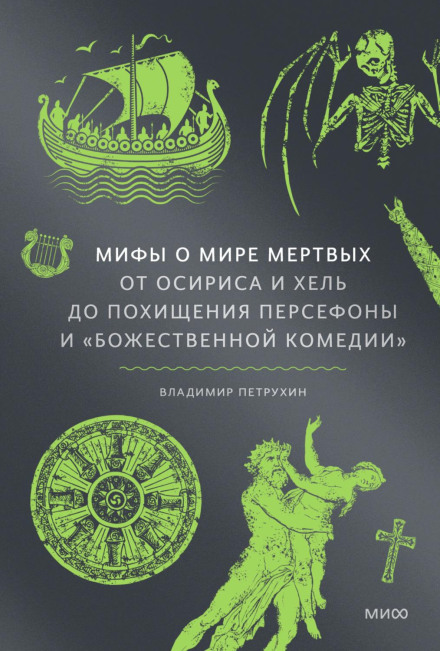
Myths of the Underworld. From Osiris and Hel to the Abduction of Persephone and the Divine Comedy
14 hrs. 4 min.
Language
Russian
Author
Vladimir Petrukhin
Author
Vladimir Petrukhin
Narrator
Pavel Potapov
Narrator
Pavel Potapov
Description
How to live «here» so you won’t regret «there»? Who decides the fate of the soul—who is granted the path to heaven, and who is destined to endure hellish suffering?
In all times, people tried to understand what awaits them beyond earthly life. Death seemed alien to nature and incomprehensible: people tried to wall themselves off from it, but it was death that fed the imagination and became a source of myths, beliefs, and rituals.
Vladimir Petrukhin’s new book is a grand journey through images of the afterlife as understood by different peoples and eras—from the inhabitants of the far north to Australia, from Ancient Greece to Scandinavia and Italy.
You will learn how various cultures answered key questions about death, what they imagined heaven and hell to be like, how they said goodbye to the dead, and what kind of immortality people dreamed of.
From the author:
This book gathers accessible retellings of myths about one’s fate after death, along with the author’s explanations. Here are stories about the realms of the dead, epic heroes, inhabitants of Valhalla and the Elysian Fields. Later Christian and Buddhist images of heaven and hell are also considered, as well as the “archaic” myths of peoples who, before meeting Europeans, preserved a way of life reminiscent of the Stone Age: Australian aborigines, Bushmen, Papuans, and others.
One of the main motifs in such tales is the hero’s journey to the other world (as in the ancient story of Orpheus and Eurydice); the same motif lies at the heart of Dante’s “Divine Comedy.”
In the rituals of many peoples, shamans were considered guides into the world of the dead. Ancient layers of Siberian shamanism are often linked with tales of afterlife journeys of heroes from India, Iran, and Greece: in the Bronze Age, according to these beliefs, the ancestors of the peoples of Iran, Hindustan, and the Balkans emerged from Northern Eurasia—legendary Hyperborea. The book also includes accounts of “living dead”—vampires, and ghouls from the Slavic tradition, whose frightening images continue to live on in literature and film: it’s enough to recall Gogol’s Viy and Count Dracula. Even some cultural phenomena—such as the rise of theater and portrait painting—are discussed in connection with ancestor worship and reverence for the dead.
For whom is this book:
For everyone interested in folklore, mythology, and how it continues to influence modern life.
For those compiling the series “Myths from A to Z.”
For readers who are curious about the unusual, “shadow” sides of culture.
In all times, people tried to understand what awaits them beyond earthly life. Death seemed alien to nature and incomprehensible: people tried to wall themselves off from it, but it was death that fed the imagination and became a source of myths, beliefs, and rituals.
Vladimir Petrukhin’s new book is a grand journey through images of the afterlife as understood by different peoples and eras—from the inhabitants of the far north to Australia, from Ancient Greece to Scandinavia and Italy.
You will learn how various cultures answered key questions about death, what they imagined heaven and hell to be like, how they said goodbye to the dead, and what kind of immortality people dreamed of.
From the author:
This book gathers accessible retellings of myths about one’s fate after death, along with the author’s explanations. Here are stories about the realms of the dead, epic heroes, inhabitants of Valhalla and the Elysian Fields. Later Christian and Buddhist images of heaven and hell are also considered, as well as the “archaic” myths of peoples who, before meeting Europeans, preserved a way of life reminiscent of the Stone Age: Australian aborigines, Bushmen, Papuans, and others.
One of the main motifs in such tales is the hero’s journey to the other world (as in the ancient story of Orpheus and Eurydice); the same motif lies at the heart of Dante’s “Divine Comedy.”
In the rituals of many peoples, shamans were considered guides into the world of the dead. Ancient layers of Siberian shamanism are often linked with tales of afterlife journeys of heroes from India, Iran, and Greece: in the Bronze Age, according to these beliefs, the ancestors of the peoples of Iran, Hindustan, and the Balkans emerged from Northern Eurasia—legendary Hyperborea. The book also includes accounts of “living dead”—vampires, and ghouls from the Slavic tradition, whose frightening images continue to live on in literature and film: it’s enough to recall Gogol’s Viy and Count Dracula. Even some cultural phenomena—such as the rise of theater and portrait painting—are discussed in connection with ancestor worship and reverence for the dead.
For whom is this book:
For everyone interested in folklore, mythology, and how it continues to influence modern life.
For those compiling the series “Myths from A to Z.”
For readers who are curious about the unusual, “shadow” sides of culture.
100%
11:09
00
1:32:26
01
11:51
02
25:07
03
25:27
04
38:44
05
33:43
06
32:37
07
16:56
08
42:03
09
1:12:59
10
2:14:14
11
21:20
12
48:48
13
21:46
14
32:35
15
17:24
16
30:44
17
2:14:30
18
