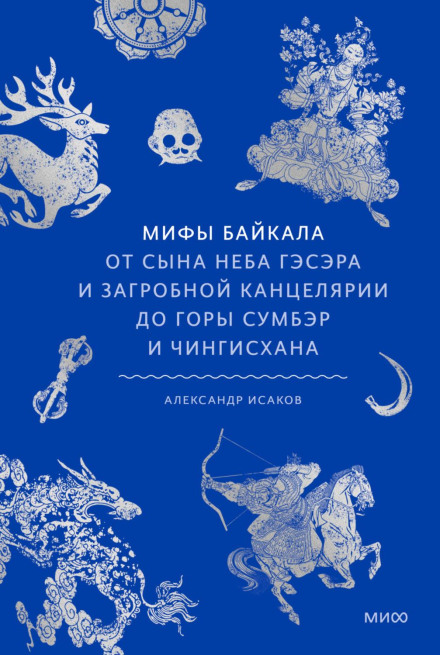
Мифы Байкала. От сына неба Гэсэра и загробной канцелярии до горы Сумбэр и Чингисхана
4 ч. 27 мин.
Описание
Народы Прибайкалья называют Байкал не озером, а морем. Вокруг этого «моря» простирается зачарованный, населенный множеством существ мир: в небесах живут звезды и божества-тэнгрии, по земле бродят духи-«иголки», одноглазые и одноногие чулугды и всякая нечисть, а в подземных чертогах, похожих на канцелярию, суд вершит Эрлик-хан вместе со своими демонами.
Книга Александра Исакова — живой и захватывающий пересказ мифов, легенд и сказаний бурят и эвенков, чья культура веками формировалась на стыке шаманизма, буддизма и христианства. Здесь рассказывается о сотворении мира и происхождении шаманского дара, о священной горе Сумбэр — входе в иную реальность, о необыкновенных деяниях Гэсэра и даже о подвигах Чингисхана. В книге также говорится о том, как шаманы защищают людей от темных сил и почему им приходится время от времени отправляться в «землю мрака», где их пищей становятся одни кузнечики.
Что скрыто в значении названия Байкала — «Остановись, огонь»? Зачем великан-лось по ночам уносит Солнце? Чем отличаются «западные» и «восточные» тэнгрии, а также «белые» и «черные» кузнецы? Какое верховное божество в Бурятии напоминает Деда Мороза? Почему у владыки мертвых сгнили обе ноги? Каким образом царская бюрократия повлияла на представления бурят о загробном устройстве? И как Чингисхан в сознании байкальских народов превратился из исторического правителя в демиурга и прародителя?
Через шаманские предания, древние записи и обрядовые песнопения книга вводит в пространство волшебной степи, где у каждого камня и каждого дерева есть свой скрытый смысл.
Для кого эта книга:
Для любителей истории и мифологических сюжетов.
Для тех, кому интересны культура, верования и обряды народов России.
Для читателей, которые хотят заглянуть в прошлое и увидеть его переклички с настоящим.
От автора:
Эта книга не ставит целью собрать и пересказать все мифы бурят и эвенков. Она задумана как ориентир и первый проводник для тех, кто только начинает знакомство с их фольклором: поможет увидеть общую картину мифологического мироустройства, запомнить ключевых персонажей и основные сюжеты.
Для прибайкальских народов Байкал — место особой силы. В преданиях его нередко объясняют как гигантский разлом, который заполнила вода: когда-то здесь была ровная суша, но затем земля внезапно раскрылась, и так появилось крупнейшее озеро мира. Иногда разгадку ищут в самом имени: по-бурятски Байкал звучит как Байгал и перекликается с выражением «Бай гал» — «Остановись, огонь!». Сказания утверждают, что это сходство не случайно: на месте провала бушевал страшный пожар, и люди молили, чтобы пламя прекратилось. Тогда с неба хлынула вода, затушила огонь, наполнила разлом — и возник Байкал.
Книга Александра Исакова — живой и захватывающий пересказ мифов, легенд и сказаний бурят и эвенков, чья культура веками формировалась на стыке шаманизма, буддизма и христианства. Здесь рассказывается о сотворении мира и происхождении шаманского дара, о священной горе Сумбэр — входе в иную реальность, о необыкновенных деяниях Гэсэра и даже о подвигах Чингисхана. В книге также говорится о том, как шаманы защищают людей от темных сил и почему им приходится время от времени отправляться в «землю мрака», где их пищей становятся одни кузнечики.
Что скрыто в значении названия Байкала — «Остановись, огонь»? Зачем великан-лось по ночам уносит Солнце? Чем отличаются «западные» и «восточные» тэнгрии, а также «белые» и «черные» кузнецы? Какое верховное божество в Бурятии напоминает Деда Мороза? Почему у владыки мертвых сгнили обе ноги? Каким образом царская бюрократия повлияла на представления бурят о загробном устройстве? И как Чингисхан в сознании байкальских народов превратился из исторического правителя в демиурга и прародителя?
Через шаманские предания, древние записи и обрядовые песнопения книга вводит в пространство волшебной степи, где у каждого камня и каждого дерева есть свой скрытый смысл.
Для кого эта книга:
Для любителей истории и мифологических сюжетов.
Для тех, кому интересны культура, верования и обряды народов России.
Для читателей, которые хотят заглянуть в прошлое и увидеть его переклички с настоящим.
От автора:
Эта книга не ставит целью собрать и пересказать все мифы бурят и эвенков. Она задумана как ориентир и первый проводник для тех, кто только начинает знакомство с их фольклором: поможет увидеть общую картину мифологического мироустройства, запомнить ключевых персонажей и основные сюжеты.
Для прибайкальских народов Байкал — место особой силы. В преданиях его нередко объясняют как гигантский разлом, который заполнила вода: когда-то здесь была ровная суша, но затем земля внезапно раскрылась, и так появилось крупнейшее озеро мира. Иногда разгадку ищут в самом имени: по-бурятски Байкал звучит как Байгал и перекликается с выражением «Бай гал» — «Остановись, огонь!». Сказания утверждают, что это сходство не случайно: на месте провала бушевал страшный пожар, и люди молили, чтобы пламя прекратилось. Тогда с неба хлынула вода, затушила огонь, наполнила разлом — и возник Байкал.
100%
12:29
00
20:43
01
42:01
02
32:08
03
33:31
04
26:41
05
16:48
06
29:15
07
25:08
08
28:21
09
