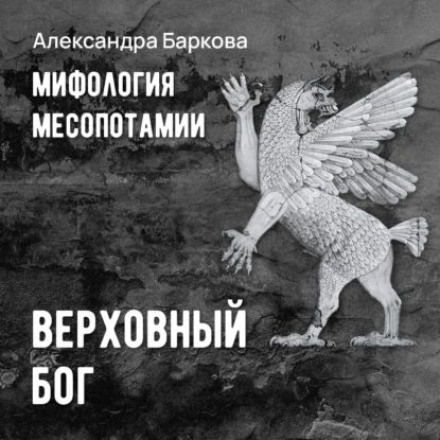
Mythology of Mesopotamia
2 hrs. 31 min.
Language
Russian
Author
Barkova Alexandra
Author
Barkova Alexandra
Narrator
Alexandra Barkova
Narrator
Alexandra Barkova
Description
1. S. N. Kramer’s book “History Begins at Sumer” has long become a classic, but it contains a number of errors. Why should Kramer’s interpretation of the Sumerian creation myth and the supreme god Enlil be considered outdated?
2. A number of myths about the formation of the world’s appearance are associated with the ruler of the world’s waters, Enki. How did the Sumerians understand the magic of the divine Word? How did they perceive the serene “paradise”? And what are the roots of the biblical myth about the creation of a woman from a rib?
3. The myth of a dying and resurrecting god is one of the central ones in the Ancient East; it arises in Sumer. How was the relationship between the world of the living and the world of the dead imagined? What is the tragic story of the goddess Inanna?
4. How did scattered Sumerian tales become a coherent Babylonian poem? Which episodes fell out, and why? Is anything known about the real prototype of Gilgamesh? Did scattered Sumerian tales really become a coherent Babylonian poem? Which episodes fell out, and why? Is anything known about the real prototype of Gilgamesh?
5. What makes Gilgamesh unique among the heroes of world epic? What is the mythological symbolism of the tales about Enkidu’s creation, the cutting of cedars, and the victory over the heavenly bull? How do the Sumerian and Babylonian versions differ?
6. Sin-lēqi-unninni as an author who radically denies epic values and turns his poem into a narrative about the futility of human efforts. Symbolism of mythological motifs in the story of the search for immortality.
7. Although most Assyrian plots were borrowed from the Sumerians, the myth of the thunderer Marduk, his struggle with the giant serpent Tiamat, and the creation of the world from her body is purely Babylonian. It is valuable on its own, but even more interesting are its comparative-historical parallels.
2. A number of myths about the formation of the world’s appearance are associated with the ruler of the world’s waters, Enki. How did the Sumerians understand the magic of the divine Word? How did they perceive the serene “paradise”? And what are the roots of the biblical myth about the creation of a woman from a rib?
3. The myth of a dying and resurrecting god is one of the central ones in the Ancient East; it arises in Sumer. How was the relationship between the world of the living and the world of the dead imagined? What is the tragic story of the goddess Inanna?
4. How did scattered Sumerian tales become a coherent Babylonian poem? Which episodes fell out, and why? Is anything known about the real prototype of Gilgamesh? Did scattered Sumerian tales really become a coherent Babylonian poem? Which episodes fell out, and why? Is anything known about the real prototype of Gilgamesh?
5. What makes Gilgamesh unique among the heroes of world epic? What is the mythological symbolism of the tales about Enkidu’s creation, the cutting of cedars, and the victory over the heavenly bull? How do the Sumerian and Babylonian versions differ?
6. Sin-lēqi-unninni as an author who radically denies epic values and turns his poem into a narrative about the futility of human efforts. Symbolism of mythological motifs in the story of the search for immortality.
7. Although most Assyrian plots were borrowed from the Sumerians, the myth of the thunderer Marduk, his struggle with the giant serpent Tiamat, and the creation of the world from her body is purely Babylonian. It is valuable on its own, but even more interesting are its comparative-historical parallels.
100%
19:51
01. Шумерская мифология - верховный бог
20:57
02. Шумерская мифология - владыка мировых вод
21:13
03. Шумерская мифология - нисхождение в подземное царство
23:46
04. Гильгамеш - история эпоса
20:24
05. Гильгамеш - подвиги героев
22:18
06. Гильгамеш - от эпоса к сентиментальной поэме
23:15
07. Вавилонская мифология
