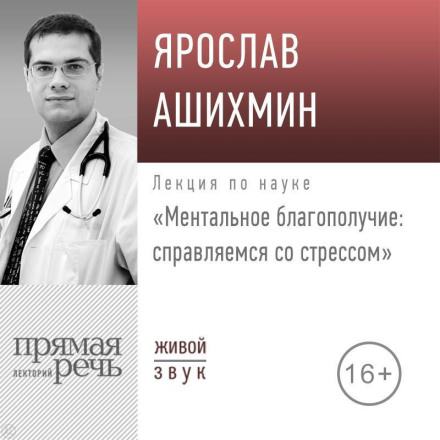
Лекция «Ментальное благополучие: справляемся со стрессом»
1 ч. 12 мин.
Описание
Изучение влияния стресса на организм является одной из наиболее сложных задач современной медицины. Термин "стресс" был введён почти 100 лет назад, и с тех пор, особенно в последние десятилетия, учёные и врачи активно занимаются исследованием этого явления. Они стремятся разобраться в его проявлениях и причинах, по которым не получается контролировать стресс так же легко, как, например, изменить свой рацион. Как определить, когда уровень стресса становится чрезмерным и требует вмешательства? Об этом, а также о способах минимизации его негативного воздействия на организм, рассказывает известный кардиолог Ярослав Ашихмин. В рамках лекции будут обсуждены следующие вопросы: почему стресс вызывает повышение артериального давления, почему одни люди в состоянии стресса испытывают сонливость, а другие – желание перекусить; как правильно подготовиться к последствиям стресса, если его невозможно избежать; есть ли медикаментозные средства для борьбы со стрессом; какие методы помогают облегчить стресс и улучшить самочувствие. Стресс возникает, когда наши адаптивные способности не справляются с новыми, сложными условиями. Более 70% людей в мире хотя бы раз переживали серьёзные стрессовые ситуации. Несмотря на то, что научное внимание к этому состоянию появилось относительно недавно, с опорой на современные исследования, мы обсудим, как управлять стрессом, – утверждает Ярослав Ашихмин. Ярослав Ашихмин – кандидат медицинских наук, терапевт, кардиолог, советник генерального директора Фонда Международного медицинского кластера.
100%
1:12:19
Лекция «Ментальное благополучие: справляемся со стрессом»
