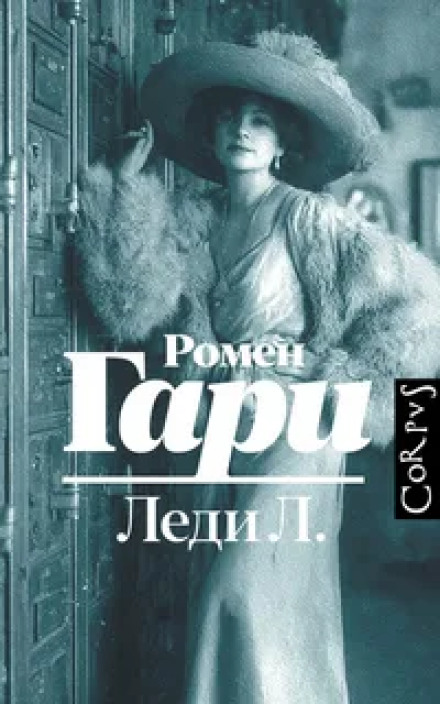
Lady L.
7 hrs. 34 min.
Description
One of the wittiest and truly cinematic novels by the great French author.
An elderly English duchess recalls and retells the story of her turbulent affair with a fanatical anarchist.
Romain Gary is one of the most prominent figures in French literature: a two-time winner of the Goncourt Prize and the creator of more than twenty novels known worldwide. He was a diplomat, a participant in the war, a pilot, and a commander of the Order of the Legion of Honour. He was born in Vilnius (today—Vilnius) and already at the age of nine began writing in Russian. His real name was Roman Kacev, and the surname-pen name “Gary” traces back to the Russian verb “to burn.”
“Lady L.” is a story of all-consuming love unfolding at the end of the nineteenth century against a backdrop of anarchist raids and political murders committed in the name of a “happy future.” Fifty years later, a respected duchess—once passionately in love with a radical—entrusts her memories to an old friend, shocked by what had been hidden behind the flawless reputation of the adored woman. The reader follows the life of Anette Boudin: the daughter of a Paris laundress and a drunken father; she managed to be a prostitute, an anarchist, and a spy—and in the end became a refined English lady, the Duchess of Glendeйл. What final secret will she reveal on the day of her eightieth birthday?
This book is often called Gary’s farewell gift to his first wife—an English writer, Lesley Blanch, whose traits, it’s said, can be sensed in the irresistible Lady L.
The novel was adapted into a film: the 1965 movie was directed by Peter Ustinov, and the leads were played by Sophia Loren and Paul Newman.
The edition is published in a new translation by Natalia Mavlevich.
An elderly English duchess recalls and retells the story of her turbulent affair with a fanatical anarchist.
Romain Gary is one of the most prominent figures in French literature: a two-time winner of the Goncourt Prize and the creator of more than twenty novels known worldwide. He was a diplomat, a participant in the war, a pilot, and a commander of the Order of the Legion of Honour. He was born in Vilnius (today—Vilnius) and already at the age of nine began writing in Russian. His real name was Roman Kacev, and the surname-pen name “Gary” traces back to the Russian verb “to burn.”
“Lady L.” is a story of all-consuming love unfolding at the end of the nineteenth century against a backdrop of anarchist raids and political murders committed in the name of a “happy future.” Fifty years later, a respected duchess—once passionately in love with a radical—entrusts her memories to an old friend, shocked by what had been hidden behind the flawless reputation of the adored woman. The reader follows the life of Anette Boudin: the daughter of a Paris laundress and a drunken father; she managed to be a prostitute, an anarchist, and a spy—and in the end became a refined English lady, the Duchess of Glendeйл. What final secret will she reveal on the day of her eightieth birthday?
This book is often called Gary’s farewell gift to his first wife—an English writer, Lesley Blanch, whose traits, it’s said, can be sensed in the irresistible Lady L.
The novel was adapted into a film: the 1965 movie was directed by Peter Ustinov, and the leads were played by Sophia Loren and Paul Newman.
The edition is published in a new translation by Natalia Mavlevich.
This audiobook has been removed at the request of the copyright holder.
