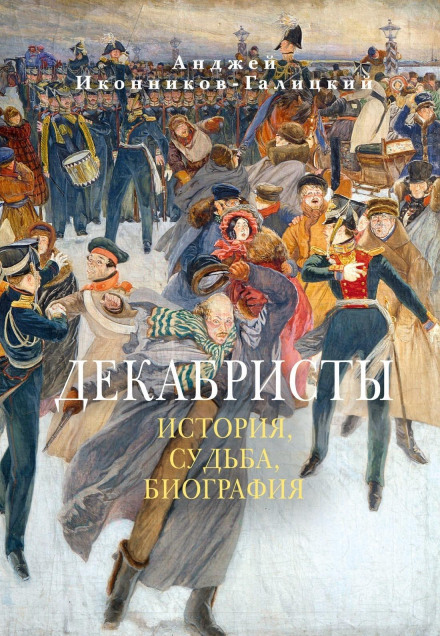
Декабристи: Історія, доля, біографія
23 год. 3 хв.
Опис
Виступ на Сенатській площі 14 грудня 1825 року залишається однією з найпомітніших і найбільш обговорюваних віх російської історії. І навіть через два століття тривають суперечки про те, що стало його справжньою причиною, яким був задум, як розгорталися події та до чого вони призвели. Це був великий політичний крок групи дворян-однодумців, які намагалися здійснити переворот, чи лише «інцидент», як називали те, що відбувалося, офіційні документи?
Зрозуміти природу декабристського руху, не спираючись на готові ідеологічні схеми, допомагає уважний розгляд особистих історій його учасників.
У книзі розповідається про 120 декабристів, засуджених Верховним кримінальним судом. Слідство, що проводилося під безпосереднім контролем імператора Миколи І, призвело до того, що 117 обвинувачених визнали свою провину; більшість очікувала ув’язнення, каторжні роботи та заслання, а п’ятьох було засуджено до страти. Хто були ці люди: для кого повстання могло стати сходинкою до влади, а хто втягнувся в політичний вир випадково? Як склалися їхні долі до 1825 року й після нього, хто зміг пережити тяжкість покарання, а хто не витримав випробувань і зламався?
Ці питання розглядаються в новій праці петербурзького історика Анджея Іконникова-Галицького.
Зрозуміти природу декабристського руху, не спираючись на готові ідеологічні схеми, допомагає уважний розгляд особистих історій його учасників.
У книзі розповідається про 120 декабристів, засуджених Верховним кримінальним судом. Слідство, що проводилося під безпосереднім контролем імператора Миколи І, призвело до того, що 117 обвинувачених визнали свою провину; більшість очікувала ув’язнення, каторжні роботи та заслання, а п’ятьох було засуджено до страти. Хто були ці люди: для кого повстання могло стати сходинкою до влади, а хто втягнувся в політичний вир випадково? Як склалися їхні долі до 1825 року й після нього, хто зміг пережити тяжкість покарання, а хто не витримав випробувань і зламався?
Ці питання розглядаються в новій праці петербурзького історика Анджея Іконникова-Галицького.
100%
34:37
Декабристы: История, судьба, биография 01
14:47
Декабристы: История, судьба, биография 02
13:47
Декабристы: История, судьба, биография 03
3:08:32
Декабристы: История, судьба, биография 04
2:12:36
Декабристы: История, судьба, биография 05
50:41
Декабристы: История, судьба, биография 06
1:50:54
Декабристы: История, судьба, биография 07
1:11:03
Декабристы: История, судьба, биография 08
1:31:27
Декабристы: История, судьба, биография 09
2:47:17
Декабристы: История, судьба, биография 10
3:53:48
Декабристы: История, судьба, биография 11
1:00:53
Декабристы: История, судьба, биография 12
3:06:01
Декабристы: История, судьба, биография 13
27:31
Декабристы: История, судьба, биография 14
