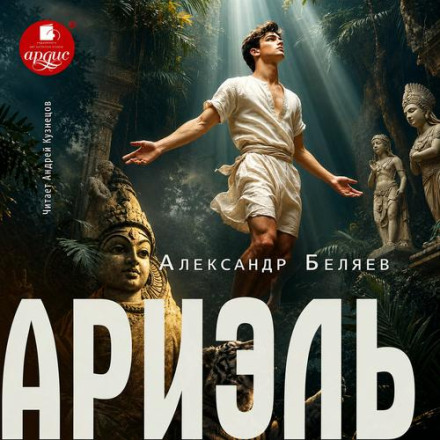
Аріель
6 год. 56 хв.
Мова
російська
Автор
Олександр Бєляєв
Автор
Олександр Бєляєв
Читець
Андрій Кузнецов
Читець
Андрій Кузнецов
Опис
«Ариэль» Олександра Беляєва — останній і, на думку багатьох критиків, найкращий роман майстра вітчизняної фантастики, екранізований у 1992 році.
У таємничій езотеричній школі Дандарат, захованій углибинах Індії, виховують людей із незвичайними здібностями: тут через суворі випробування, медитації та аскези пробуджують приховані сили духу. Серед вихованців — юнак на ім’я Ариэль, чия доля виявляється ще дивовижнішою, ніж у інших.
Ставши об’єктом загадкового експерименту, він здобуває неймовірну здатність — літати. Крила йому не дано природою, але тепер небо стає його стихією. Однак дар польоту обертається не лише свободою: Ариэль стикається з жадібністю, заздрістю та користолюбством світу, де його унікальна природа — не чудо, а товар.
Беляєв поєднує фантастичну історію з глибокими роздумами про людську природу, свободу та справедливість. «Ариэль» захоплює з перших сторінок: це захопливе мандрівування, сповнене небезпек і відкриттів, де мрія про політ веде героя через випробування до розуміння самого себе. Роман нагадує: справжня свобода — не в умінні ширяти над землею, а в здатності залишатися людиною, навіть коли ти вище за всіх.
У таємничій езотеричній школі Дандарат, захованій углибинах Індії, виховують людей із незвичайними здібностями: тут через суворі випробування, медитації та аскези пробуджують приховані сили духу. Серед вихованців — юнак на ім’я Ариэль, чия доля виявляється ще дивовижнішою, ніж у інших.
Ставши об’єктом загадкового експерименту, він здобуває неймовірну здатність — літати. Крила йому не дано природою, але тепер небо стає його стихією. Однак дар польоту обертається не лише свободою: Ариэль стикається з жадібністю, заздрістю та користолюбством світу, де його унікальна природа — не чудо, а товар.
Беляєв поєднує фантастичну історію з глибокими роздумами про людську природу, свободу та справедливість. «Ариэль» захоплює з перших сторінок: це захопливе мандрівування, сповнене небезпек і відкриттів, де мрія про політ веде героя через випробування до розуміння самого себе. Роман нагадує: справжня свобода — не в умінні ширяти над землею, а в здатності залишатися людиною, навіть коли ти вище за всіх.
100%
00:15
01. Заглавие и выходные данные
20:31
02. Глава первая. По кругам ада
12:56
03. Глава вторая. Дандарат
23:41
04. Глава третья. Опыты мистера Хайда
05:32
05. Глава четвертая. Друзья
14:26
06. Глава пятая. На новой стезе
14:02
07. Глава шестая. К неведомой судьбе
10:56
08. Глава седьмая. Боден и Хезлон
04:55
09. Глава восьмая. Камень преткновения
07:33
10. Глава девятая. Человеческий муравейник
12:38
11. Глава десятая. Бездомные нищие
07:13
12. Глава одиннадцатая. Начистоту, или оба хороши
05:50
13. Глава двенадцатая. «Воздушные зайцы»
17:07
14. Глава тринадцатая. Вишну и парии
08:39
15. Глава четырнадцатая. И боги могут завидовать людям
07:54
16. Глава пятнадцатая. Может ли дорожная пыль мечтать о солнце
04:56
17. Глава шестнадцатая. Опять в неволе
17:51
18. Глава семнадцатая. Яблоко раздора
05:39
19. Глава восемнадцатая. Неудачные поиски
09:23
20. Глава девятнадцатая. Владыка разгневан
13:14
21. Глава двадцатая. Мир восстановлен
09:35
22. Глава двадцать первая. Согласен
05:47
23. Глава двадцать вторая. Новая игрушка
13:59
24. Глава двадцать третья. Мохита собирает материал
07:47
25. Глава двадцать четвертая. Гроза разразилась
03:49
26. Глава двадцать пятая. Владыка изменчив
06:12
27. Глава двадцать шестая. Борьба за жизнь
03:16
28. Глава двадцать седьмая. Находка
05:12
29. Глава двадцать восьмая. Он улетел
04:54
30. Глава двадцать девятая. Воздушный бой
10:11
31. Глава тридцатая. Чуждый небу и земле
12:11
32. Глава тридцать первая. В джунглях
09:39
33. Глава тридцать вторая. «Новообращенный»
10:25
34. Глава тридцать третья. «Чудо»
08:09
35. Глава тридцать четвертая. Брожение умов
04:01
36. Глава тридцать пятая. Деловой разговор
04:00
37. Глава тридцать шестая. Полет
10:51
38. Глава тридцать седьмая. Законтрактованный небожитель
08:54
39. Глава тридцать восьмая. «Все проходит, как сон»
05:47
40. Глава тридцать девятая. «Возвышенный» разговор
05:35
41. Глава сороковая. «Биной Непобедимый»
09:22
42. Глава сорок первая. Два мира
08:07
43. Глава сорок вторая. Страдающая мать
11:52
44. Глава сорок третья. Снова обман
11:34
45. Глава сорок четвертая. К друзьям
