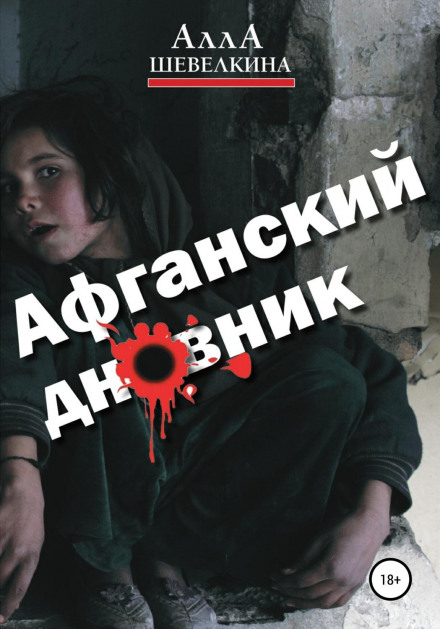
Afghan Diary
2 hrs. 21 min.
Language
Russian
Author
Alla Shevelkina
Author
Alla Shevelkina
Narrator
Natalya Domeretskaya
Narrator
Natalya Domeretskaya
Description
I found myself in Afghanistan at the end of October 2001, with a French film crew—one month after the assassination of the Northern Alliance leader Massoud and the terrorist attack on the Twin Towers in New York. At that time there were still no international peacekeeping forces in Afghanistan, and Kabul—like much of the country—was under the control of the Taliban. The Northern Alliance troops controlled only a small territory in northern Afghanistan and a narrow Panjshir valley.
The idea of keeping a diary and describing everything that happened to us—and, most importantly, telling how people live in this battered, once-flourishing country—came to me on the second day in Afghanistan, when I realized that I hadn’t simply ended up in a completely different country: I had made a time journey and found myself in the Middle Ages without light and water, but with Jeeps and Toyotas, as well as tanks, cannons, and Kalashnikov rifles.
Twenty years have passed, but in the country little has changed. Only this time, Kabul was taken by the Taliban.
Lyudmila Ulitskaya, writer: We all live in a zone of unprecedented information noise that we ourselves create. In this curtain of noise, you can’t hear either the voice of nature or the voice of the universe. And even more important is when we hear the voice of a careful observer of those events, about which one can say with certainty only one thing: it would have been better if they hadn’t happened. But such events are becoming more and more common in our world. And the more gratitude you feel toward the people who—steadily and without being damaged by political preferences—look closely at catastrophic events and try to find the coordinates of good and empathy in the mad world that we ourselves created, and in which we suffer so painfully.
Alla Shevelkina’s voice is one of those voices that helps come to terms with the prickly and joyless reality. The essence of Alla’s work as a journalist goes beyond ordinary journalistic tasks: with her, readers make an effort to understand complex and many-layered reality. This is the mission of the modern journalist.
Arkady Dubnov, journalist: Alla Shevelkina, for many years representing well-known French media in Russia, a brave journalist and a beautiful woman, should have published this book a long time ago. We discussed it with her ever since the day she first told me about her Afghanistan diary. These are extremely important testimonies from a professional and honest observer, who saw Afghanistan for the first time at the beginning of one of the most tragic periods in its history—the American operation “Enduring Freedom,” launched exactly 20 years ago, in October 2001, after the Al-Qaeda terrorist attacks on New York and Washington.
Dmitry Oreshkin, geographer and political scientist: Written with piercing clarity and precision. And it’s about the very people who, 20 years ago, overcame the Taliban and attempted to open up to civilization! Terrifying to think what was happening back then behind the front lines, on the other side. And what is happening there now, when the Taliban has won after all. The book is astonishingly relevant—but only for those who know how to read.
Viktor Shenderovich, writer: Alla Shevelkina published an Afghanistan diary that she (at the time, as a correspondent for a French television channel) kept exactly 20 years ago—back when, after September 11, Americans weren’t leaving Kabul, they were only preparing to enter it… This diary is a deep and moving immersion in that very Middle Ages that, according to Lest, belongs to each century of its own… The early 21st century has written yet another injection of sad truths into our reality, and Alla Shevelkina’s diary will tell you why the Taliban returned to Kabul so easily better than five dissertations. The time for this publication was chosen very precisely. Take a look into this halted world where “the road is measured not in kilometers, but in hours…”
The idea of keeping a diary and describing everything that happened to us—and, most importantly, telling how people live in this battered, once-flourishing country—came to me on the second day in Afghanistan, when I realized that I hadn’t simply ended up in a completely different country: I had made a time journey and found myself in the Middle Ages without light and water, but with Jeeps and Toyotas, as well as tanks, cannons, and Kalashnikov rifles.
Twenty years have passed, but in the country little has changed. Only this time, Kabul was taken by the Taliban.
Lyudmila Ulitskaya, writer: We all live in a zone of unprecedented information noise that we ourselves create. In this curtain of noise, you can’t hear either the voice of nature or the voice of the universe. And even more important is when we hear the voice of a careful observer of those events, about which one can say with certainty only one thing: it would have been better if they hadn’t happened. But such events are becoming more and more common in our world. And the more gratitude you feel toward the people who—steadily and without being damaged by political preferences—look closely at catastrophic events and try to find the coordinates of good and empathy in the mad world that we ourselves created, and in which we suffer so painfully.
Alla Shevelkina’s voice is one of those voices that helps come to terms with the prickly and joyless reality. The essence of Alla’s work as a journalist goes beyond ordinary journalistic tasks: with her, readers make an effort to understand complex and many-layered reality. This is the mission of the modern journalist.
Arkady Dubnov, journalist: Alla Shevelkina, for many years representing well-known French media in Russia, a brave journalist and a beautiful woman, should have published this book a long time ago. We discussed it with her ever since the day she first told me about her Afghanistan diary. These are extremely important testimonies from a professional and honest observer, who saw Afghanistan for the first time at the beginning of one of the most tragic periods in its history—the American operation “Enduring Freedom,” launched exactly 20 years ago, in October 2001, after the Al-Qaeda terrorist attacks on New York and Washington.
Dmitry Oreshkin, geographer and political scientist: Written with piercing clarity and precision. And it’s about the very people who, 20 years ago, overcame the Taliban and attempted to open up to civilization! Terrifying to think what was happening back then behind the front lines, on the other side. And what is happening there now, when the Taliban has won after all. The book is astonishingly relevant—but only for those who know how to read.
Viktor Shenderovich, writer: Alla Shevelkina published an Afghanistan diary that she (at the time, as a correspondent for a French television channel) kept exactly 20 years ago—back when, after September 11, Americans weren’t leaving Kabul, they were only preparing to enter it… This diary is a deep and moving immersion in that very Middle Ages that, according to Lest, belongs to each century of its own… The early 21st century has written yet another injection of sad truths into our reality, and Alla Shevelkina’s diary will tell you why the Taliban returned to Kabul so easily better than five dissertations. The time for this publication was chosen very precisely. Take a look into this halted world where “the road is measured not in kilometers, but in hours…”
